
What are the Benefits of a Heat Pump?
Heat pumps are an alternative method of heating your home. They use a different technology and a different fuel to create warmth to heat your home and provide you with hot water. Traditional central heating systems have, in the main, used gas or oil-fired boilers; a heat pump uses electricity, which is not a fossil fuel and does not damage the Earth’s atmosphere to the same extent as gas or oil do.
Some will argue that generating electricity from a gas-fired power station causes harmful greenhouse gas emissions, and they are correct. However, the majority of electricity generated in the UK now comes from renewable sources like wind or solar and that will continue to be the case.
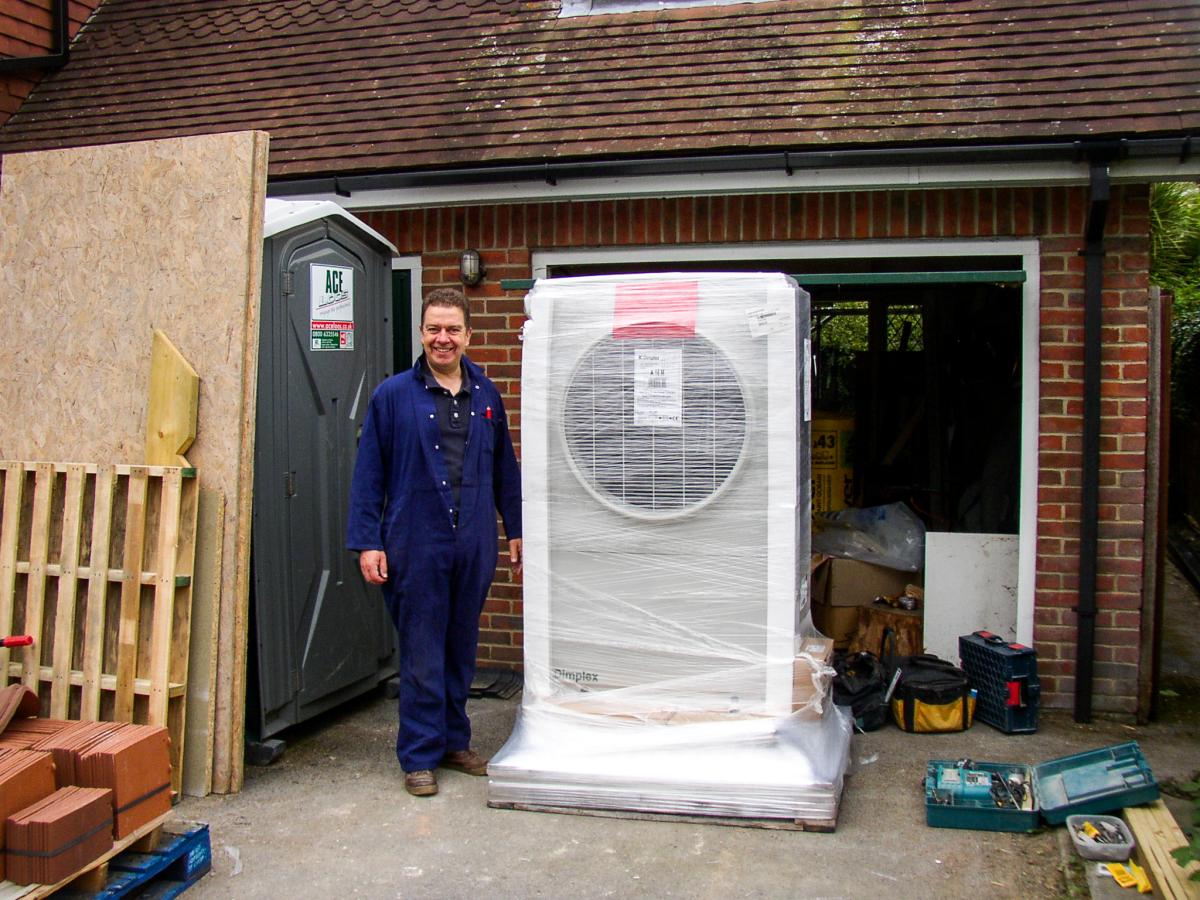
The most common type of heat pump used in domestic properties in the UK is an Air Source Heat Pump. There are two types of air source heat pumps, air to air and air to water. Both of these collect air from outside the property, take the naturally occurring heat from it, pass it through a heat exchanger and release it at a higher temperature into your heating system. Air to water heat pumps use the hot air it produces to provide hot water to your home and are the most commonly used in the UK. The air to air unit delivers warm air into the property and works in the same way as an air conditioning unit, so can be used to cool a property rather than heat it during the summer months. They are less expensive to install but do not qualify for government grants.
By using electricity as opposed to gas to fuel this process, a heat pump cuts down carbon emissions by around 80% in comparison to a gas boiler. A conventional gas boiler can use around 10,000 kWh of gas to heat a home, producing 2.42 tonnes of CO2, while an air source heat pump might only need 3.300 kWh of electricity, producing only .40 tonnes of CO2.
Cutting down harmful emissions of CO2 and other toxic gases is the main driver behind the move from fossil fuelled systems, but cleaner air is not the only benefit being seen from heat pumps. They can also cut down the cost of providing heating and hot water to your home.
The cost of installing a gas boiler can be somewhere around £4,000, depending on the type of boiler being fitted, whereas an air to water, air source heat pump installation is likely to cost somewhere between £8,000 and £16,000 depending on the size of the property and the design of the system. However, under the UK government’s Boiler Upgrade Scheme, homeowners may be eligible for a grant of up to £7,500 against the cost of installing an air to water, air source heat pump.
The potential cost savings in running a heat pump depends on two factors. An old gas boiler will be much less efficient than a newer model and will use more gas than a newer more efficient one and potentially require more maintenance. The expected lifecycle of an air source heat pump is quoted as being around 20 years as opposed to the 12 - 15 years of a gas boiler, which is another cost benefit worth noting. The annual savings accrued by replacing an older “G” rated gas boiler could be around £250, however, the running cost of replacing a newer “A” rated gas boiler could actually be slightly higher than that of a heat pump. It is, however, unlikely that you would change out a reasonably new gas boiler with a heat pump.
The other factor is the price you pay for your electricity. The cost of electricity to the consumer can vary from supplier to supplier, so it can pay to shop around for the lowest tariff. Several electricity suppliers are now offering special “Heat Pump” tariffs which give access to lower rates at off-peak times. Also worth noting are the tariffs on offer to electric vehicle (EV) drivers. These tariffs can be as low as 7p per Kilowatt hour (kWh) during the hours from late night to early morning, and during these hours, will allow all power usage in your property, not just your EV, to be charged at the low rate.
It is also worth noting that a conventional domestic gas boiler will deliver hot water for your heating system at around 60-65°C, which is hot enough for your radiators to provide a comfortable room temperature. An air source heat pump, on the other hand, will only heat water to about 45-50°C. This may mean that, depending on how your radiators were sized when originally installed, you may want to consider installing larger radiators to provide a greater heat-radiating surface area.
If installing under-floor heating is an option, it is well worth the investment because it offers the largest available heat radiating surface, and the entire floor area acts as a heating element. Using the floor area of a room means that you can heat that room using water at a lower temperature than would be required by a conventional radiator.
At the moment, there is some doubt over whether the present government's date of 2035 for the abolition of gas boilers will remain, but at some stage in the future, we will not be allowed to install a gas boiler in our homes, and the Boiler Upgrade Scheme will probably have a limited lifespan, ending apparently in April 2028. There is no doubt that the extra cost of installing an air source heat pump will put many people off, but as with electric vehicles, it is a matter of short-term pain followed by long-term gain, with the added bonus of helping to protect the environment for our children and their children.