
Don’t be Bamboozled by Bamboo
To some gardeners, bamboo is an invasive weed that spreads almost uncontrollably. Others plant bamboo and use it in pots or in gardens as an ornamental screen. Canes will grow in some cases up to five meters tall and can be seen to wave around animatedly in a breeze. Used with imagination, bamboo can be used to form an attractive feature in the garden.
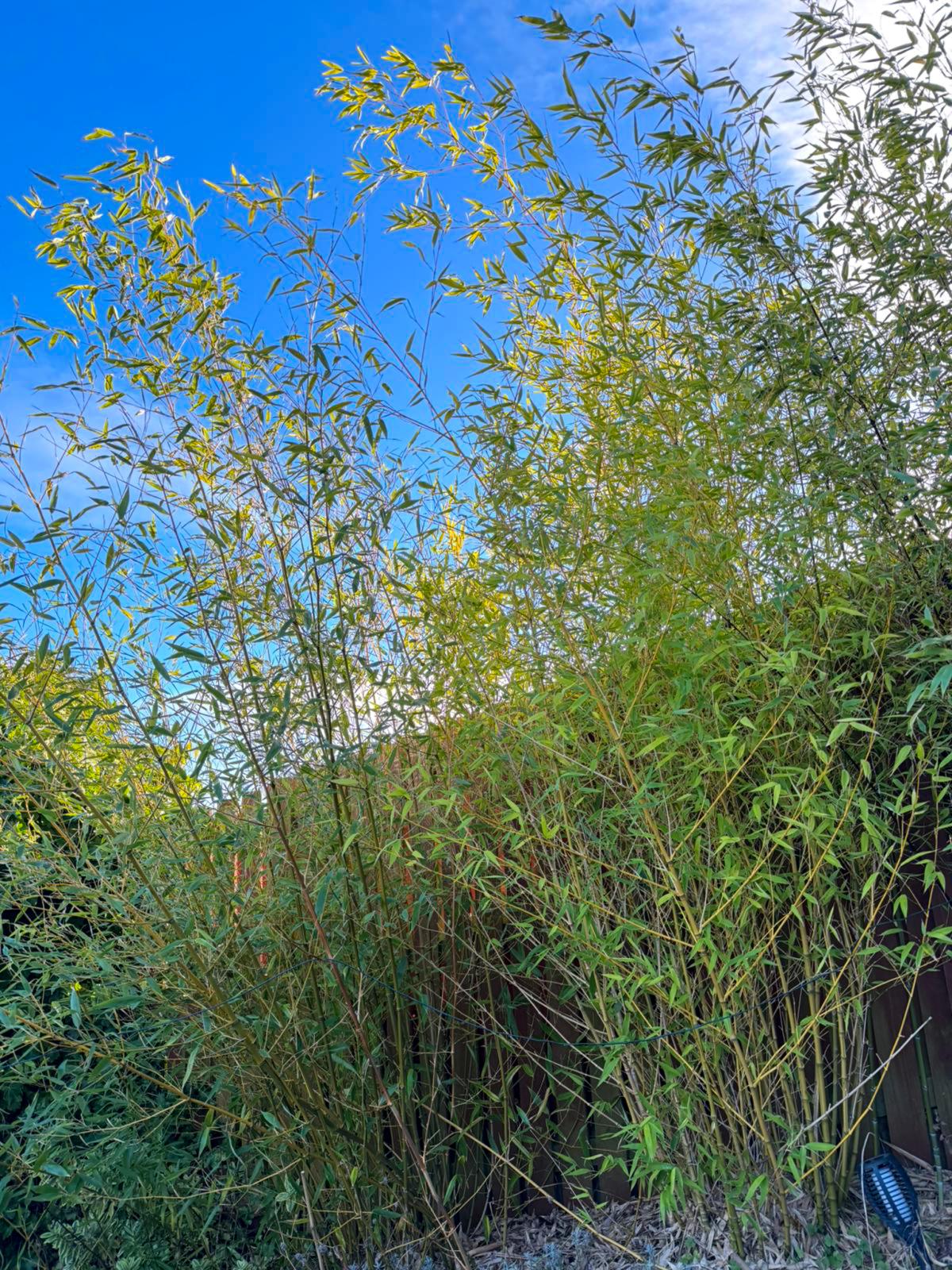
There are a number of species of bamboo, as there are with many plants, but in general terms these varieties fall into two categories, clump-formers which usually stay in a tight, easily managed clumps and runners which have a tendency to spread, and if not properly managed can get out of hand and become a real nuisance.
If you are looking to buy a bamboo which will grow in a manageable fashion, look for a clumping variety. Most of these are of the Fargesia or Chusquea genus and grow in tight, easily managed clumps that expand slowly making them ideal for UK gardens, patio pots or small privacy screens. Your local garden centre staff will be able to advise you of the best variety for your garden. Clumping varieties of bamboo require only minimal maintenance to keep them in check. If you are growing your bamboo in pots, choose a pot at least twice the size of the root ball and check occasionally that the root ball is not being constrained by its pot. If a bamboo becomes pot bound you can either, opt to replant it in a larger pot or split the root ball between two pots.
Runners are less controllable and given the opportunity will send out numerous underground succours known as rhizomes. Rhizomes are creeping root like formations that are actually adapted stems. They are horizontal, underground stems that grow and spread within six to twelve inches of the soil surface. As they grow, they form roots and nodes along their length which will eventually break the surface as a new shoot which if unchecked, can grow to the same height as the parent plant. As rhizomes grow under the surface, they will eventually pop up through the soil in the shape of a new shoot, often some distance from the original plant. These will in turn develop new rhizomes of their own, and so the plant spreads to the extent that it will become an invasive nuisance.
There are a number of instances where running bamboo can be used either for ornamental or screening purposes and in these cases, it is wise to use some method of containment to stop the rhizomes from spreading and the bamboo becoming unmanageable. One method is to use a heavy duty root barrier either from a garden centre or online supplier. These are made from High Density Polyethylene (HDPE) of at least 60 to 80 mm thick. Other plastics or metal sheets will soon begin to deteriorate or rust.
Dig a trench of approximately 24 to 30 inches deep around the perimeter of the bamboo bed to accommodate these barriers. Running bamboo rhizomes will normally grow within the top 6 to 12 inches of soil, so 24 to 30 inches should provide a safe buffer. Having dug your trench, then set the root barrier into it at a slight angle leaning away from the bamboo. This deflects any rogue rhizomes toward the surface where you can easily spot them and cut them off before they have the opportunity to spread. Keep the top edge of the barrier about 2 to 3 inches above the surface rather than bury it completely, otherwise rhizomes can easily grow over the top.
You will probably need more than one heavy duty root barrier sheet so it is important to overlap these by around 12 inches and seal the joints firmly, otherwise rhizomes will easily make their way through the joints and regenerate outside of your trench.
If for some reason you would rather not use a root barrier to contain running bamboo, you should dig a trench of around 15 to 20 inches deep around the planted area and do a regular walk round the area once or twice a year to visually inspect the trench for rhizomes. Check the trench for rhizomes crossing the trench or escaping from the containment area and cut them cleanly away from the mother plant. Due to the fact that running bamboo rhizomes grow horizontally just beneath the surface, they are easily exposed which then makes them easy to cut off and follow to the end of the rhizome. If the whole rhizome is not exposed and removed, it will sprout a new stem from one of the remaining nodes. Running bamboo rhizomes can grow up to a few metres away from the main plant if not dealt with, so the moral is, the longer the time between inspections, the longer the rhizomes will grow.
Like most plants, bamboo needs a certain amount of care and maintenance. Clumping bamboo, particularly grown in a pot, will need less than running bamboo, with watering and occasional trimming being the main items with the occasional feed during the growing season with a nitrogen-rich fertilizer.
Runners planted in the garden need to be monitored regularly to check for any shoots or rouge rhizomes which should be cut out as soon as they are spotted if the plant is to be contained. It is also important to trim back the older growth in the centre of the plant. If this is not done, the centre of the plant will become crowded, this will force the new growth outwards, meaning rhizomes will grow out more quickly.
If all of the preventative measures around runner bamboos seem to be a little over the top, it should be remembered that bamboo rhizomes are not only extremely vigorous, but are also exceedingly strong and if left to grow out of control, they can cause damage to other plants as well as damaging paths, driveways and other structures.
It is also important to remember that, as with many other species of plant, not all varieties are suited to all applications. If planted in the right way and well managed, runner bamboo can be every bit as decorative and useful as clumping varieties.