
Off the beaten track: the pros and cons of living on an unadopted road
Living on an unadopted road can bring to mind a private and secure idyll. Set back from the thoroughfares and main roads, unadopted roads can also bring promise of a relatively peaceful home and garden. However, owning a property on an unadopted road brings with it a host of responsibilities that the homeowner or prospective buyer should be aware of.
As unadopted roads aren’t maintained by the public purse, the responsibility for maintenance and repair falls to the homeowner or homeowners with properties that front the road in questions - ‘frontagers’. In most cases, ownership is shared between several frontagers. There must then be agreement as to how the road is kept up to standard, what this standard is exactly, who carries out any work (and how often), and crucially, who pays. And what if there is a disagreement? The responsibilities of shared ownership have the potential to test neighbourly relations and household budgets alike.
The following article will outline the pros and cons of living on an unadopted road, as well as points that prospective buyers should consider.
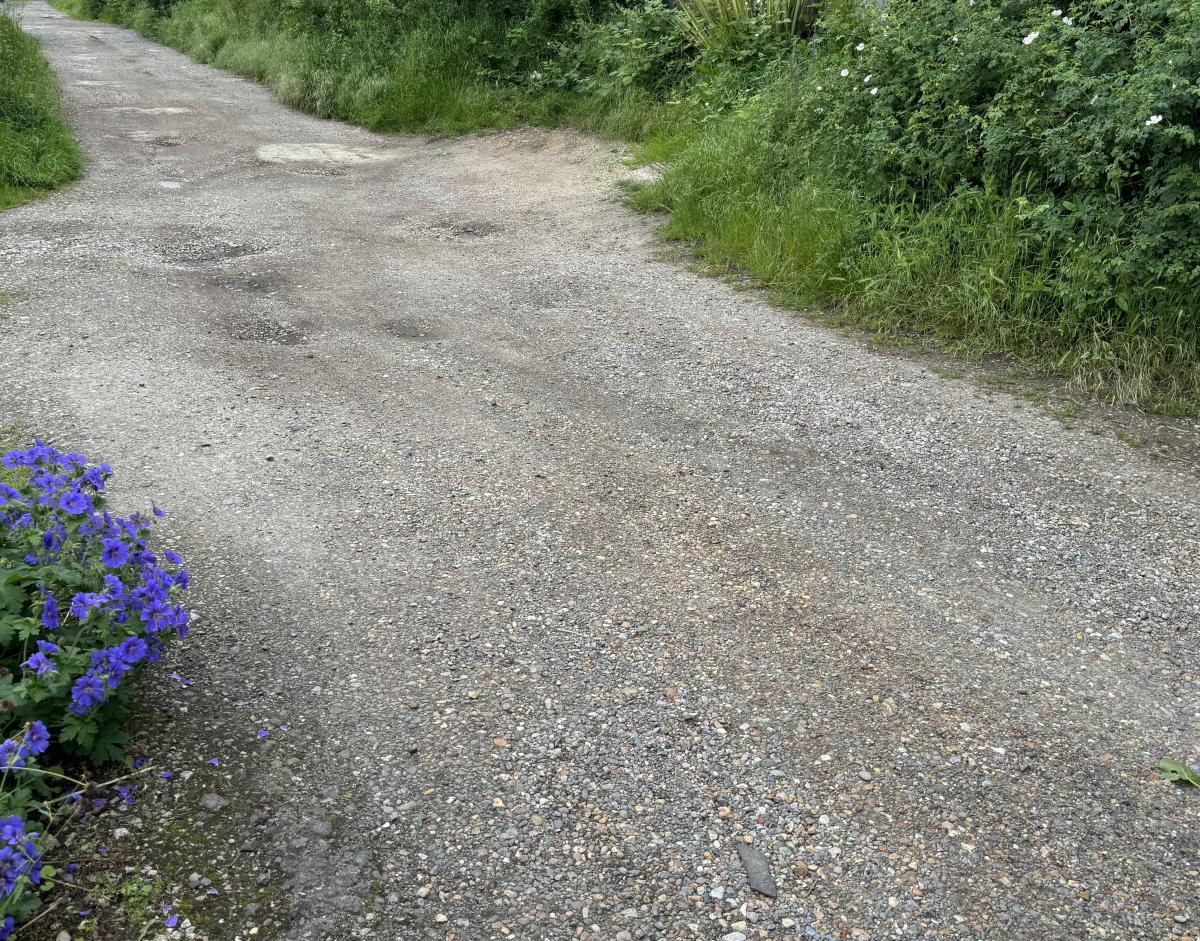
What is an unadopted road?
According to the Highways Act (1980), unadopted (or private) roads are highways that aren’t maintained by the Local Authority. There is no public right of way, and frontagers are responsible for arranging and paying for repairs and maintenance. The Local Authority cannot make repairs even if they are deemed urgent. Conversely, unadopted/private streets have a public right of way, and the Local Authority is able to make repairs where necessary and charge frontagers for this.
According to a 2018 House of Commons report, there is thought to be around 40,000 unadopted roads in England and Wales, with a total length of approximately 4000 miles (Commons Library Briefing, 2018). The same report states that these roads are typically found within new housing developments or have existed as unadopted roads historically - sometimes for centuries.
Pros
Unadopted roads undoubtedly offer an increased level of privacy for homeowners, even in densely populated and built-up suburbs. With no right of way, Joe Public hasn’t any right to use or park on the unadopted road. This can confer substantial benefits to homeowners. Firstly, there is almost always parking and access for homeowner’s guests and deliveries. For example,
Our road is directly opposite a large secondary school, and we’ve never had any issues with parents parking up and blocking our driveway during pick up/drop off time; this is a daily occurrence for homeowners who live on adopted roads a few hundred yards away. We benefit from the proximity to the school, as our children can walk there quickly and safely, but we aren’t disadvantaged by school the traffic.
Secondly, unadopted roads can feel truly private as many won’t be aware of lane or the houses on it if they’ve never had cause to travel down it. Contractors who’ve lived and worked in the town all their lives told us they never knew the lane existed until they came round to quote, despite the fact it is directly off a main road (and opposite a large secondary school!).
As well as few people using the lane, being ‘off the beaten track’ means there is also less noise from traffic - both vehicular and pedestrian. In our case, we are in a busy suburb, close to a motorway junction and two busy A-roads, but it certainly doesn’t sound like it down our little lane.
Finally, there is also an added level of safety and security on an unadopted road. With no right of way, there isn’t reason for anyone other than guests or deliveries to be on the lane. Furthermore, the relatively poor standard of many unadopted roads can be a safety feature (in a roundabout way). In our case, the vast majority of the lane is littered with potholes. Although this is problematic in its own way (see below- ‘Cons’) it deters people from driving down the lane at speed. With small children, dogs and cats living on the lane, this can be very reassuring.
Cons
As the public purse won’t fund repairs or maintenance on a private road, it of course falls to the frontagers. The extent to which this is a con depends on a range of factors and the particular road in question. What condition is the road in? How long ago was it last resurfaced, or how old is it? How well do the current frontagers work together to manage their shared responsibility? Frustratingly, it can be difficult to get a true representation of the latter before buying a property and moving in.
It isn’t unheard of for frontagers to form an association which collects an annual payment from all members to fund maintenance works or any repairs that crop up. In other cases, frontagers form a company that buys the road and insures it, as well as funding its repair and maintenance through the company. In other cases, still, the Title Deeds to properties on the road may include a clear schedule for maintenance works and the requirement to pay for this.
If no formal arrangements or stipulations are in place, frontagers need to reach an informal agreement with regards to maintenance and repair works. This can work well in itself; many unadopted roads are maintained on the loosely-organised basis that everyone ‘chips in’ when the time comes for a repair. However, in the worst-case scenario, neighbourly relations can be tested to their limit collecting funds for repairs and maintenance works, and then agreeing upon a contractor to carry out the works where necessary.
Imagine trying to get a reluctant neighbour to pay towards resurfacing a section of road that they deem in good working order might be an impossible task. What is important to one might be negligible to another. What if one property is situated at the very top of an unadopted road; can they reasonably refuse to chip in towards repairs at the lower end, on the basis that they never need to use it and didn’t contribute to the damage in that area? When disputes arise, it can take some time to reach an agreement and carry out repairs, by which time it can often be a much bigger job altogether. Bear in mind that often water pipes will often run under the road and the importance of keeping it in good condition becomes clear. Even minor maintenance works, like cutting back verges, can be a battle. We’ve found it generally falls to one or two conscientious neighbours to bear the brunt of it, rather than face a stand-off or let the lane become narrower and narrower as the verges become overgrown.
If the road is allowed to fall into a bad state of repair, there is also a major risk of damage and homeowners being liable to foot the bill. For example, what if water pipes or car wheels are damaged by potholes that aren’t filled in a timely manner? Some frontagers or associations of frontagers take out insurance for such eventualities, but again there may be parties that refuse to contribute.
In terms of convenience, poorly maintained unadopted roads may deter delivery drivers, posties and bin lorries from driving down the lane. Although this might be an inconvenience some are happy to sacrifice (rather than spend time and money bringing the road up to standard), it is unlikely all parties concerned will share that viewpoint: whilst some neighbours would be happy to wheel their bins 200m up to the main road each week, others certainly wouldn’t be! Similarly, salting an icy lane in the depths of winter is a prospect that many don’t want to entertain; this responsibility would of course fall to the homeowners in the case of an unadopted lane.
Lastly, when buying a property on an unadopted road there will undoubtedly be questions about the right of access, and the right to use the unadopted road to access the property needs to be established in the conveyancing process. If this right hasn’t been made clear previously, conveyancing solicitors and mortgage lenders may require that an indemnity policy is taken out for protection if the right of access is ever challenged. In our case, the previous owners had owned the property for over 30 years and were able to make a Statutory Declaration to show that the right of way had been in place for this time without challenge; this was sufficient to placate our solicitor.
Points to consider for prospective buyers
If you are considering buying a property on an unadopted road, it is imperative to understand how the shared responsibility for the road is managed and how effective this has been in the past. You may not get a completely honest answer from the vendor, but you will need to make a judgement about the amount of time, energy and money you might end up spending on keeping the road in good working order.
Questions to ask the vendor (or their solicitor) could include:
- Who owns the unadopted road? Is ownership shared equally amongst all frontagers/homeowners? Have they formed an association or company to manage the lane?
- Do the Title Deeds include a clear schedule for maintenance and repair? What are the details.
- If no formal arrangement is in place, who decides what needs doing and when? How is this organised? This isn’t limited to filling potholes, but can also include gritting or clearing snow, cutting back verges etc.
- Are there informal or formal arrangements about parking on the lane?
- In the last 3/5/10 years, what work has been done on the road? How much has the vendor paid towards the maintenance/repair of the road over the years? How much have the other parties paid (if known)?
- When was the road last resurfaced (if applicable)?
- Do bin lorries come down the lane to collect refuse? Do delivery drivers and post come down the lane?
- Is there an insurance policy in place? Have any claims been made? If so, what was the outcome?
- Why was the road not adopted? Did the developer or builder prefer to retain ownership? Did they not want to spend the money getting the road up to the Local Authority standard?
- Have the homeowners ever considered applying for adoption? If an application has been made in the past, why was it declined?
Summary
Some 40,000 highways in England and Wales are unadopted roads, maintained at the expense of the homeowners whose property fronts them. Property on unadopted roads can provide a great deal more privacy and security. With no public right of way, they suffer less from traffic and all that goes with that: noise, risk of damage, vandalism, theft etc. However, the shared responsibility for the maintenance of the road needs to be managed, and the success of this is dependent on the other frontagers and the details of any arrangement in place. In the worst case, neighbourly relations can become strained and household budgets may suffer if one or more parties ends up paying more than their fair share in order to prevent the condition of the road deteriorating. An unadopted road in poor condition, for example littered with crater-like potholes, risks damage to water pipes or vehicles. In some cases, bin lorries or delivery drivers will refuse to drive down an unadopted road in very poor condition, or if the verges become so overgrown they limit access. A prospective buyer considering a property on an unadopted road might benefit from candid conversations with the vendor about these points, as well as formal enquiries through their conveyancing solicitor. There are also important points to consider with regards to insurance and establishing a right of access: certain policies may need to be in place to protect homeowners; again, the advice of the conveyancing solicitor should be sought here.