
Are online estate agents on the way out?
Traditional high street agents still the biggest players
Online estate agents were once hailed as the future of the property market. Lower fees, no shopfront overheads and slick digital dashboards promised to sweep away the traditional high street branch. Why pay thousands in commission, they argued, when a few hundred pounds would secure a Rightmove listing and a “For Sale” board. Fast forward ten years and high street agents are still the biggest players. Meanwhile a different model is gaining momentum: self-employed agents, operating under their own name, often powered by higher commission splits.
So, what’s changed? And what does it mean if you’re planning to sell?
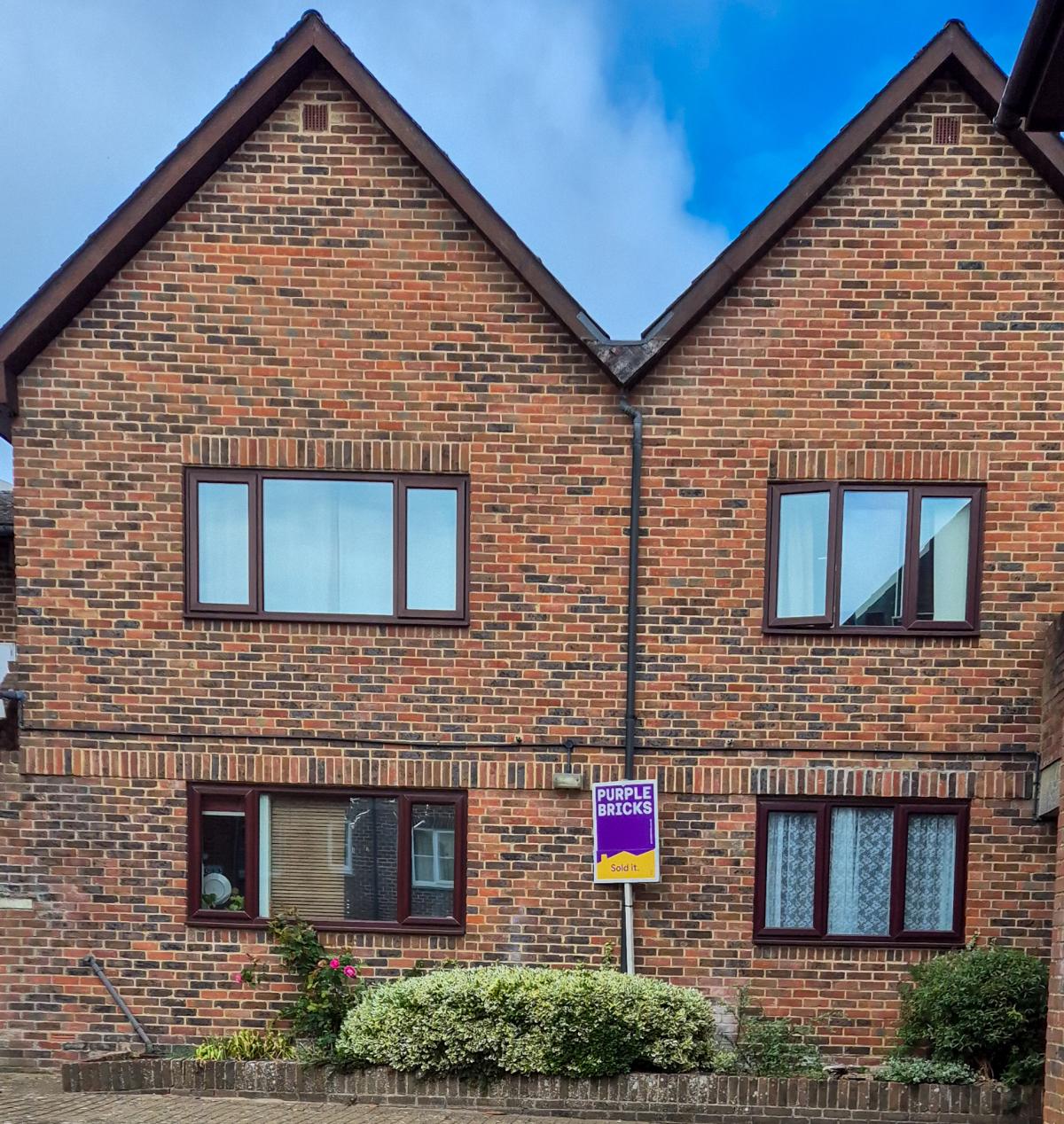
The rise – and retreat - of the online disruptors.
When Purplebricks, the first ever online agency, launched in 2014 it was seen as a major disruptor. The model was simple: pay a flat fee upfront and get your home listed on major property portals. Sellers could track progress online and conduct their own viewings to keep costs down. There was a whole range of add-ons but the basic package, which included a valuation report and a listing on Rightmove, cost just £599. The average agent’s commission at the time was £5,441.
The timing was serendipitous. In a rising market, properties were selling quickly and sellers were confident. In 2015, Purplebricks floated on London’s Alternative Investment Market (AIM) and was, at one point, valued at more than £1 billion. Other digital brands followed, including Yopa which charged £999 for its basic package. By comparison, traditional agents typically charged a commission of between one and three per cent of the final sale price. Based on a 2015 average UK house price of £272,000, that equated to £2,720 to £8,160.
Despite initial successes, the revolution soon fizzled out. By 2023, Purplebricks had been sold for a nominal £1 after years of declining performance and mounting losses. The brand was bought by its rival Strike. In its Property and Home Mover End of Year 2025 Report, data company TwentyCi says: “Online agents’ overall market share in 2025 is 5.2 per cent, down by 0.9 per cent from 2024.” It adds the high of “8.2 per cent in 2019 is highly unlikely to be repeated.”
Why online agents lost ground
The core appeal of online agents is big savings. A flat fee of £599 or £999 can look attractive compared with a commission bill running into thousands of pounds. But once additional charges for extra services, such as professional photography, floor plans or “For Sale” boards, are factored in the headline savings can be reduced. Plus, the upfront fee is less appealing in a slow market. In 2025, only 55 per cent of advertised homes went on to complete, according to TwentyCi. In those conditions, paying upfront can feel risky. If the property doesn’t sell, the seller may still owe the full fee. “Online agents are most certainly less popular with consumers now than at any time,” says Stuart Ducker, director at TwentyCi. According to Ducker, “Consumers don’t like paying upfront for an estate agent’s services, not when the chances of selling a property are low.”
Critics also point to service levels. Because the fee is frequently paid regardless of whether the home sells, some sellers feel there is less incentive to push the deal over the finishing line. By comparison, traditional high street agencies only get paid if the property sells, which means they need to be more proactive in resolving chain issues and chasing solicitors when necessary. Most online agencies have now adapted, introducing “no sale, no fee” or deferred payment options. However, these alternatives often cost more than the basic package or come with conditions, such as using the company’s conveyancing service.
Some of the big online agents have shifted to a hybrid model. For example, 99home has a £1,499 “High Street Package”, including sales negotiation and accompanied viewings. Yopa now employs named estate agents as freelancers to cover specific geographic areas. The idea is to provide sellers with a named local contact they can meet or phone instead of dealing with a national call centre.
Why high street agents are still resilient
Despite predictions of their demise, bricks and mortar agencies are still the major players. Today about 93 per cent of homes are still sold through traditional high street agents. Large companies, such as Connells Group, have extensive branch networks across the country, while independent local agencies continue to trade on local reputation and local neighbourhood knowledge.
Paul Preen, director of Lang, Town and Country in Plymouth, says: “Choosing an estate agent isn’t like buying a product where you can find a cheaper version online. Clients are paying for a service. If you pay next to nothing, expect little other than being listed on a property portal.” But if you want a “a decent service and less stress,” choose a local high street branch with a team of employees.
Selling, he argues, is about far more than listing, especially in a slow market. “When we receive an offer on a property, we check the whole chain. Managing a chain can involve calls to multiple buyers and sellers, mortgage brokers and conveyancers. Preen highlights DIY viewings and “awful” photography as problematic for online agents. “Buyers don’t like being shown around a property by the owner,” he says and marketing must be first rate. Poor quality photos taken by owners can deter would-be buyers from viewing properties.
Pricing a home accurately – neither too high or too low – matters too. Local agents live and breathe their patch - school catchments, micro-markets and buyer appetites. That insight is unlikely to be matched by an online agency covering a larger area or even the whole country.
The growth of the self-employed model
While online agents’ share has slipped, another segment has expanded: self-employed agents operating under brokerage umbrellas and on higher commission than high street branches. According to TwentyCi, self-employed agents’ share has risen from just 0.2 per cent in 2019 to around 2.2 per cent today. This concept is well established in the USA and popularised by glossy TV shows, such as Selling Sunset. Agents run their own businesses, often keeping a significantly larger share — sometimes up to 70 per cent — of the sales commission.
In Winchester, for example, Nony Kerr-Smiley works with her husband Paul under the umbrella of Martin and Co. She has nearly 30 years’ experience of selling property. Kerr Smiley limits her instruction list to about 10 homes to maintain a highly personalised services. That can include overseeing styling, accompanying photoshoots and, in a few cases, even furnishing empty homes as the owners lived abroad. On YouTube, there are videos of her helping clients in pouring rain to move home.
She says: “Depending on the market conditions, we stick to about 10 properties for sale. If it’s very quiet, then we go up to about 15 but I don’t like to take on more new properties for sale than that so I can give my very best service to clients. We do all our own sale progression. It is important to me to have the best reputation for customer service.”
Higher commission splits can incentivise more personalised service, while the agent’s own reputation becomes central to winning instructions. Some build substantial followings on Instagram and other platforms, using social media as a digital shop window. Properties can be soft launched to test pricing and generate interest before appearing on the major portals.
Preen acknowledges some self-employed agents are “very good” but he cautions about capacity. “A single agent can only handle so much stock,” he says. “In a branch office you have a whole team with specialists for valuations, viewings, sales negotiation and progression.”
For homeowners, it all comes down to priorities. If minimising cost is paramount and the property is likely to sell quickly, an online or hybrid model might prove economical. If the market is slower, the property unusual or the seller wants a more personal service, a high street branch or self-employed agent are possibly better options.