
A ‘Prepper’s Paradise’: property adaptations to increase resilience.
In the past, it has been all too easy to laugh at ‘Preppers’. Often portrayed as paranoid individuals or collectives with a niche interest in tactical equipment and maybe a dooms-day fixation. However, the launch of the UK Government’s Resilience Campaign has seen increased interest in the ‘prepper’ lifestyle. This comes on top of the government’s ‘Prepare’ campaign (launched in May 2024).
In August 2026, the Cabinet Office asked UK households to begin stocking up on non-perishable foods and water supplies: just enough to keep their household going for a few days if normal services and supply chains were disrupted. More recently, Defence Secretary Wes Streeting reiterated the need for UK households to start stockpiling, and MI5 Chief Sir Ken McCallum used his Annual Threat Update to warn of the ‘new era of national security’ that the UK finds itself in, with the potential for attacks on UK security, ‘supercharged’ by AI (13th October 2026). McCallum went on to say that this new age of security threats will require the UK to collectively increase their resilience to the systems, services, technologies and communities we take for granted.
With the threat of disruption to energy, water and food supply chains, as well as cyberattacks bringing down those technologies we rely on in day-to-day life, many households are turning to seasoned ‘preppers’ for tips and advice.
Although there is a plethora of (often conflicting) information available from prepper communities online, one thing they seem to agree on is that (in most cases) preparedness is less about evacuating (except in obvious circumstances, such as fire or flood), but staying put in the home and making this as safe and secure as possible. So, when it comes to preparedness, property takes centre stage. But how can the average household adapt their property to prepare? The following article looks at small-scale modifications that can be made or enhanced to make the home more resilient to, and prepared for, crises or emergencies.
What is prepping?
The prepping movement is broad. Overarchingly, preppers are those who plan for emergencies or crises, where ‘normal service’ has been disrupted. The most common prepping measures include stockpiling resources and mastering the skills necessary to stay safe, fed and warm until a situation has resolved. What exactly a prepper feels is required varies enormously depending on the perceived risks, threats, geography, culture, social norms and laws of the land. For example, in North America prepping often involves stockpiling ammunitions and weapons and living ‘off-grid’ in a remote location. In the UK, with a far greater population density and where owning a firearm is only allowed by license, prepping looks very different. Some prep for outbreaks of infectious diseases, floods, airstrikes, invasion, nuclear war, collapse of the rule of law…the list is endless. Others anticipate power cuts, water supply issues and food shortages. It is perhaps useful to think of preppers on scale. There are the short- and medium-term preppers (able to cope with a few days, weeks or months of disruption respectively). Then, there are the more extreme preppers: the ‘True Prepper’ website cites niche groups within the movement, such as off-grid, minimalist, survivalist, urban, lone-wolf and doomsday preppers, as well as prepping communities/cooperatives (True Prepper ).
For the purposes of this article, we will be considering ideal property modifications or additions for short- to medium-term preppers in the UK.
What are you prepping for?
The UK Government’s Resilience campaign isn’t alarmist, but it does bring to the forefront the risk that we could be without power, water and/or food for a few days, and/or to experience extreme weather events that could disrupt the above. There is no suggestion that we should be preparing for the collapse of civilisation or a zombie apocalypse. As such, the article won’t include basements, bunkers, bomb shelters, living off-grid or other adaptions that might be useful in those scenarios!
Storage: Food and Water
In line with the advice to begin gathering a small stockpile of non-perishable food and water to sustain your household for a few days, the main property feature that short- and medium-term preppers should consider is where to store these emergency resources.
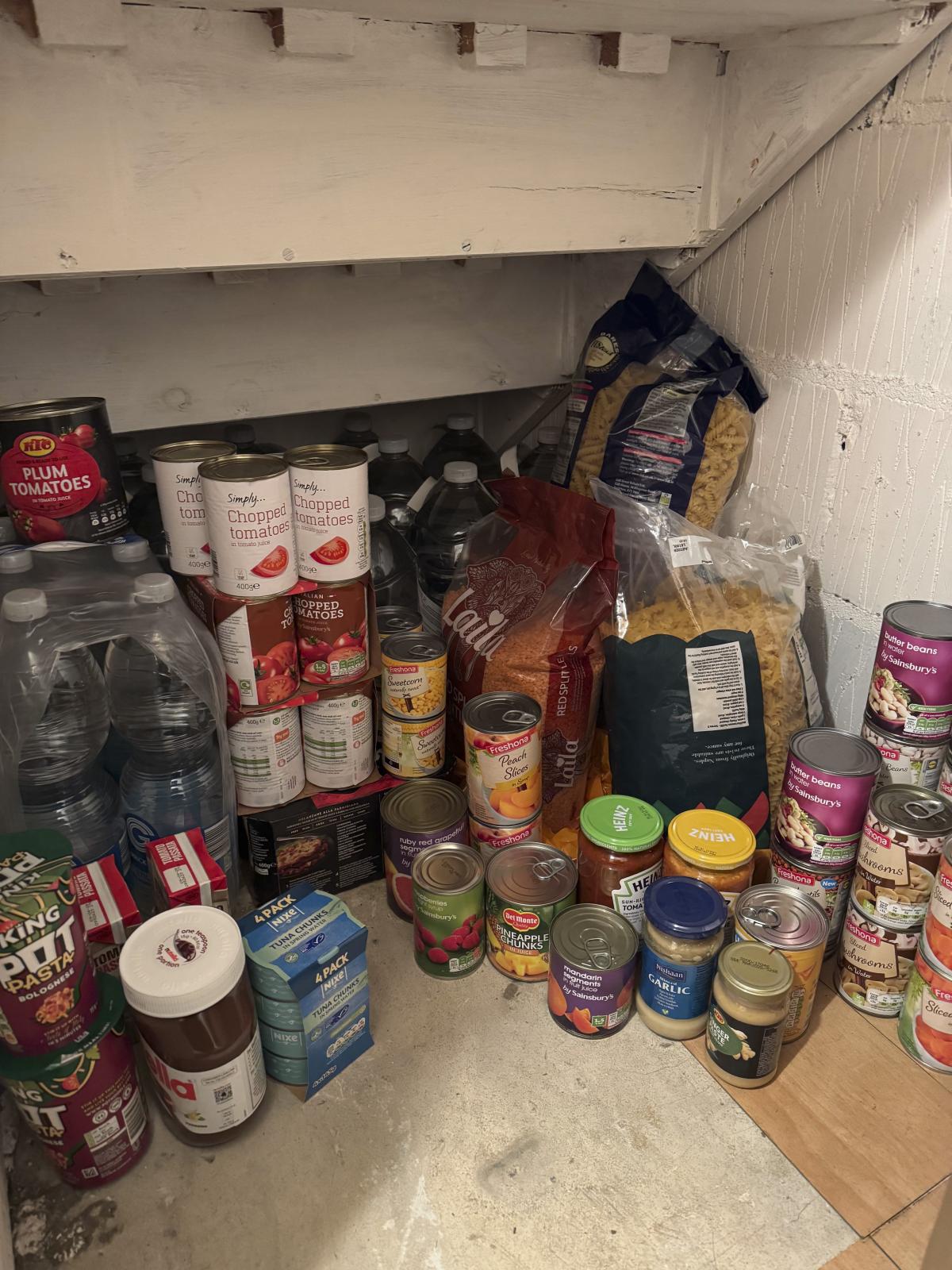
For a few days’ worth of supplies, you don’t need a dedicated pantry or walk-in larder. Is there a cool, dark and dry place in your home that you could use to store tins of beans, soups, vegetables and fruit, bottled water and hygiene essentials (toilet roll, wet wipes etc.)? An understairs cupboard would be ideal, as would the bottom of a wardrobe or under a spare bed. Properties with a pantry are already well suited to prepping, but even dedicating a kitchen shelf or two to the stockpile could suffice. Converting an understairs cupboard to a mini pantry might sound like a big project, but clearing the space and putting up a few shelves somewhere out of the way of day-to-day household activities might give greatest peace of mind (in terms of preparedness) without having to come across your stockpile each day (and risk dipping into it when you need an extra tin of tomatoes for dinner). Wherever you make your stockpile, it’s important to have relatively easy access and a basic system in place for stock rotation. This will ensure food is still safe to eat if the need arises; if a stockpile has been kept for a couple of years or more, you’d be surprised at what items may be approaching (or have passed) their best before date, and bundling a shopping trolley’s worth of tins under the spare bed isn’t the most efficient or effective way to stockpile.
Once you’ve identified the space for your stockpile, (if necessary) find a new home for anything that you’d stored there and begin building up supplies gradually; the loo-roll hoarding tendencies of Covid are still far too fresh in our collective memory to contemplate emptying the shelves in one go. As a guide, the Government suggests 10 litres of water per person per day would cover cooking, drinking and basic hygiene. So, a family of four would need 120 litres to comfortably get by over three days, or 36 litres for drinking water alone. In terms of food, these must be non-perishable and preferably things you may actually want to eat (it’s no use stockpiling foods any fussy-eaters in your household would never touch). Other useful items to include are: toilet roll, wet wipes, a first aid kit, battery or crank powered torches and a radio, batteries, battery packs (kept charged) and chargers.
Alongside food, water and hygiene essentials, consider how you would cook the food you’ve stored. Some short-term preppers keep a small camping stove with their stockpile, including sufficient fuel canisters to keep them going over several days or weeks. For those with a dedicated BBQ area in their garden, consider adding an overhead cover to allow for cooking in all weathers. Again, keeping sufficient fuel in-house is important.
Garden modifications
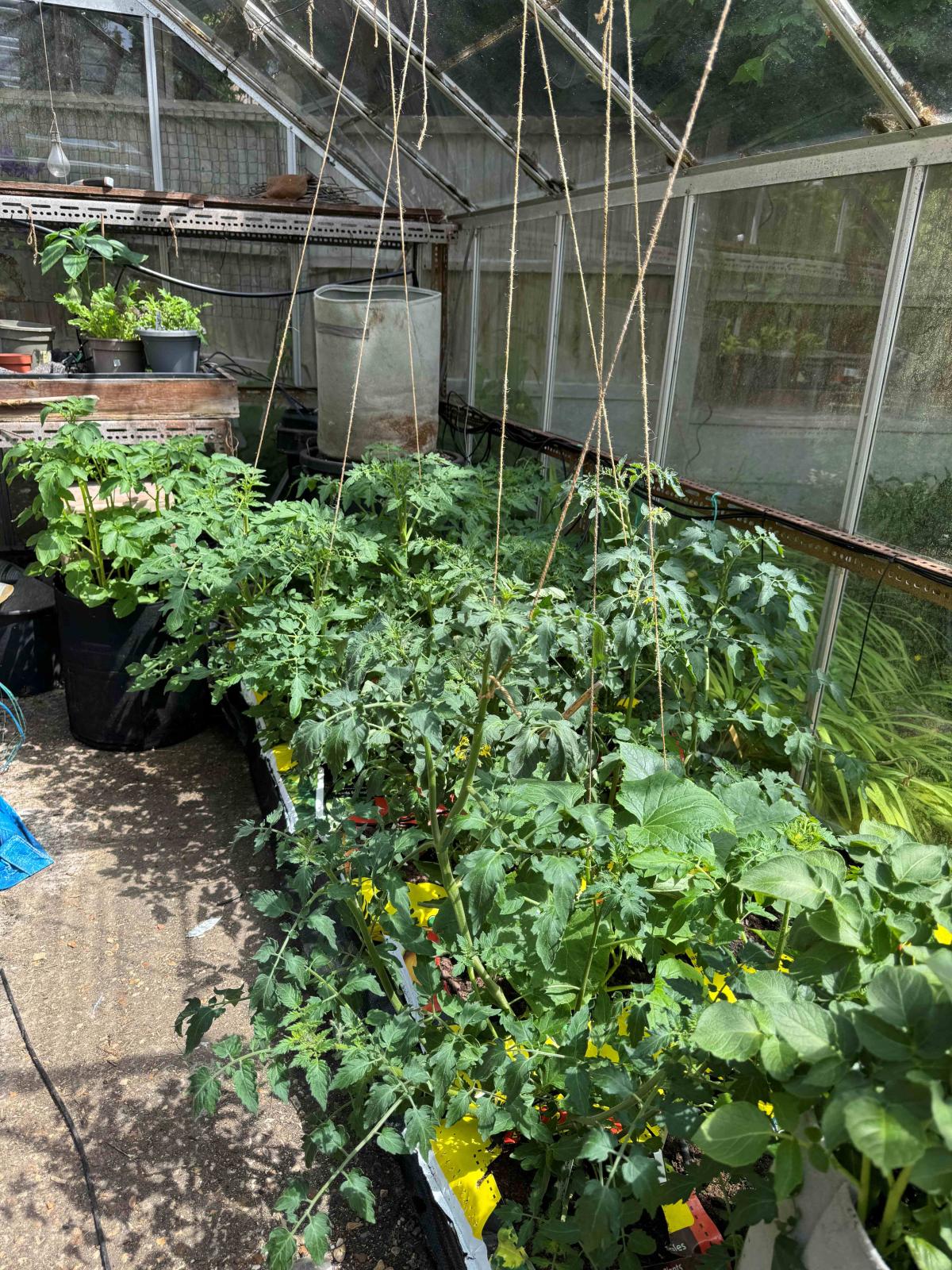
Medium-term preppers might consider bigger modifications to their garden space to reduce dependency on supermarket supply chains. Building or buying a raised bed or two for your favourite fruits and vegetables will allow you to grow your own supplies instead of relying on your local supermarket. Steel or wooden beds can cost from as little as £25-£40, with larger aluminium options £300-£400.
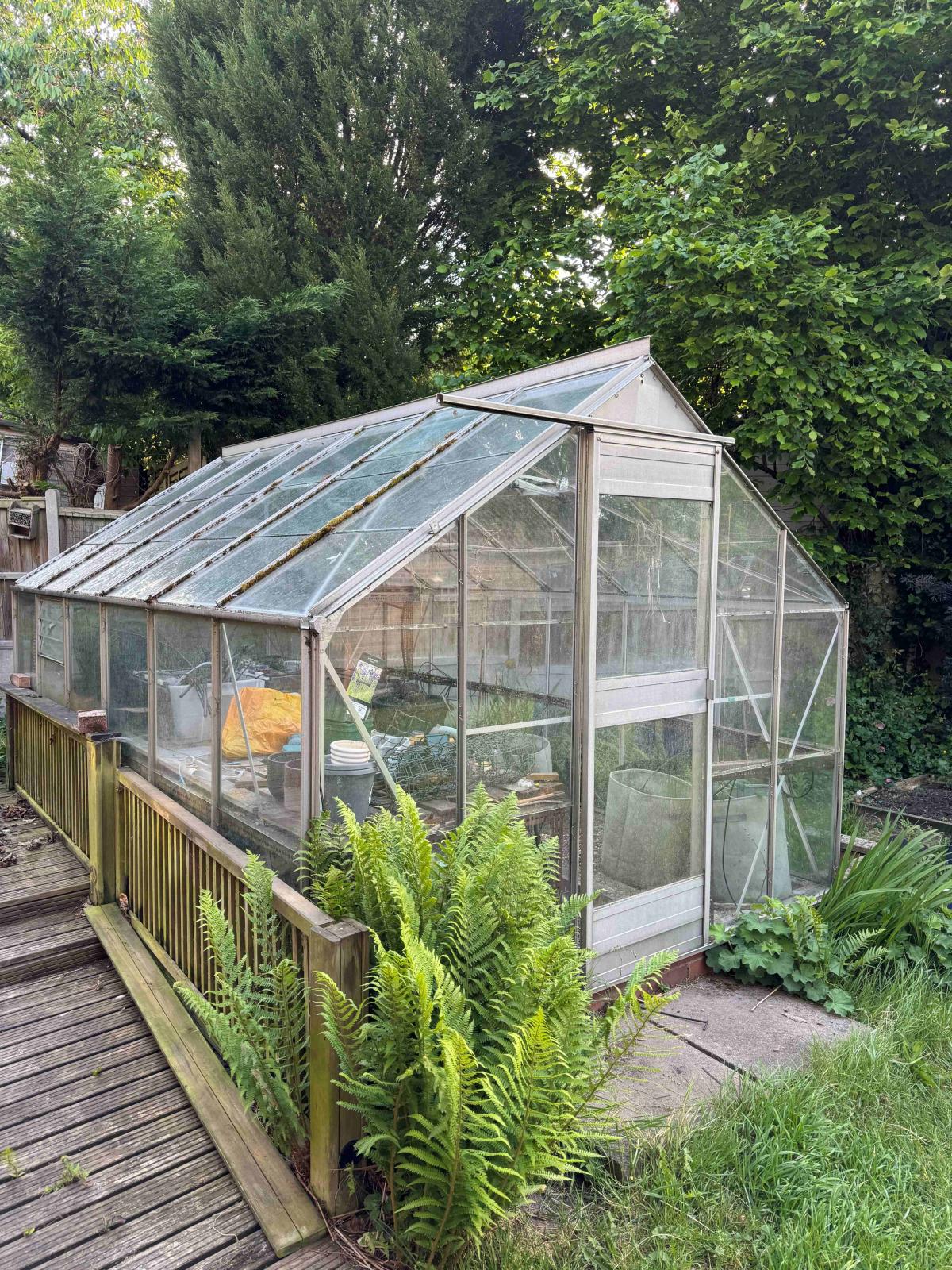
For those skilled at preserving, the homegrown harvest can help add to your stockpile throughout the seasons. Although they can be costly, installing a greenhouse will offer a prolonged growing season. Smaller models range from £350-£500, with larger models exceeding £1500-£2500.
If you are growing your own food, another ideal property addition would be a utility room. Having a room built as part of an extension or converting an existing room or area of your house, will be a big project but one that medium-term preppers might consider, as it will afford them a dedicated area for bringing in dirty, fresh-from-the-ground veg and washing this down, along with any muddy outdoor gear used to gather the household harvest. In this way, mud and other bits of the outdoors won’t make it into the wider home and all household cleaning processes are contained within one area. A smaller property modification might be installing a second sink in the kitchen which can then be dedicated to cleaning veggies.
Adding a compost bin to your garden will allow you to deal with your food waste (independent of any Local Authority collection that may be disrupted) and create nutritious mulch to improve your soil. There are many different types of compost bin to suit different budgets; the cost will depend on the material and size of the bins. ‘Hot bins’ typically range from around £100-£250; rotating bins range from £55 to £275; solar-powered bins (using solar energy for rotating, aerating or heating the drum to speed up the process) are at the higher end; plastic bins range from around £30-£100 and wooden bins from around £80-£180.
Which bin you choose will depend on your budget and aim. Steel-lined bins with help protect against pests such as rats; bear in mind that if your garden is frequented by rats already, a nice compost heap might encourage them further. Frost, rain and sun can warp or crack plastic. For those who want a natural-looking bin that blends into the garden, a wooden bin would be ideal. Bins that need to be dug into well-draining soil must ensure this is compatible with their soil type (for example, clay soil would prove difficult). Those who prefer a ‘hands-off’ approach might opt for a high-end, solar-powered rotating drum. In short, there are many options to choose from, and it is worth taking time to consider what will work best in your garden and lifestyle.
For those with garden space to spare (at least 1m2 per bird, per RSPCA guidelines) and a proclivity for animal husbandry, installing a chicken coop and getting a few hens may be another step towards food independence. However, it’s important to check your property’s restrictive covenants to ensure this isn’t prohibited. A ready-to-assemble coop can cost anywhere from £120/130 to over £1000 for more extensive models. Add to this the cost of the chickens themselves (a minimum of three), registration (on the Great Britian Poultry Register), feed, bedding and routine health checks, and it quickly becomes clear that this is definitely a modification only committed preppers with sufficient space, animal husbandry knowledge and scope within the household budget should consider.
Adding a water butt or two will help reduce dependency on the mains supply for keeping your garden watered, should this be disrupted. Water butts vary in cost depending on capacity and their attachments (stands, taps, diverters etc.) but range from around £30 to just under £100 for between 100-200L capacity models. More aesthetically pleasing water butts, or those mounted to walls, can cost several hundreds. Portable water butts cost around £40 and are ideal for making the most of periods of intense rain (something we can expect in the increasingly wetter winters) and can be collapsed and stored away at other times; generally, these aren’t made to withstand prolonged exposure to the sun and so aren’t suitable for long-term use.
Reducing Dependency on Mains Water
For the medium-term prepper looking to sustain themselves for a few months without water, storage poses a bigger problem as this quantity of bottled water takes up a considerable amount of room.
A water storage tank would be an ideal addition to the property, but the prepper will have to decide where they can store it and ensure it is fit for purpose. It must be a WRAS certified (Water Regulations Advisory Scheme), potable (safe to drink) water storage tank, as these are certified to not leach toxins into the water. As an idea of cost, a 250L such tank can cost around £150-£175; a 500L tank can cost from around £200-£250, a 1000L tank closer to £350-£400 and a of 2000L generally sets you back upwards of £400. Then take into consideration the size of the tank, and where to store it. By the government’s metric, 2000L would comfortably sustain a family of four for 50 days (including basic hygiene), so a medium-term prepper might find a 2000L tank to be insufficient. A 1000L tank would sustain a family of four for 25 days; a 500L tank just over 12 days. As an example, one vertical 2000L tank measures 1.9x1.2m, and a horizontal 1000L tank measures 1.6m x 0.6mx 1.25m. The prepper must consider where the tank would be kept, the cost of tank itself, its accessories (such as ball cocks, floats, level gauges etc.) and installation (if connected to the mains supply).
If you are connecting your storage tank to the mains water supply in England and Wales, the tank must adhere to the Water Supply (Water Fittings) Regulations 1999, so it is important to look to a retailer and installer who adheres to these. It must also be kept below 20’C and out of direct sunlight. So - where can you store a drinking water tank? If the loft or airing cupboard is the only option, it must be well insulated against the cold of winter and heat of summer. A utility room would be a good option if available. Or, if you have garden space, a small, well-insulated shed could be considered. Bear in mind that the water stored should be refreshed periodically (usually every 6 months) and maintained per the manufacturer’s instructions.
Going even further, installing a rainwater harvesting system is one way to minimise your reliance on the mains water supply for hygiene and/or drinking water (potable water requires specific treatment). More information on rainwater harvesting can be found here.
Reducing Dependency on Mains Gas and Electricity
The idea of going without electricity and gas for more than a few hours is something most people in the UK haven’t had to consider for some time. Thankfully, power banks and chargers are relatively small items that could keep the essential household tasks on track until normal service resumes. Depending on use, a 250000 - 300000mAh power bank will provide around three charges for a couple of phones; these cost anywhere from around £25 for basic models, to over a hundred pounds for those with various charging ports and faster charging speeds. For maximum preparedness, look to models with fast-charging support: ideal if an emergency situation is looming and you realise you haven’t charged in a while. Additionally, models with solar-charging capacity are useful. Medium-term preppers might consider larger power banks, which can charge many devices simultaneously and keep these going for longer periods of disruption. Such models cost several hundred pounds, and many would fit discreetly under a coffee table or similarly tucked out of the way. At the very high-end of the scale, closer to £2000-£2500 would get you a portable power station that takes you close to ‘off grid’ living for a short period, enough charge to use high-wattage appliances like kettles, toasters, microwaves and power tools.
For those considering larger property modifications, solar panels and a battery to store the power are an investment that would benefit the medium-term prepper. The cost of arrays and installation, alongside a battery or batteries, varies widely.
In the event of being left without central heating, those with an alternative heat source are best prepared. Log-burners, although contentious from an environmental point of view, provide a reliable alternative, provided you have ample stock of seasoned logs and kindling (and maintain the burner and chimney correctly). Having one installed can set you back at the very least around £1500-£2000, with some makes and models costing upwards of several thousands. There are also maintenance costs, such as an annual chimney sweep, and safety considerations (installing carbon monoxide alarms, ideally HETAS certification) as well as regulations to be aware of (e.g. Smoke Control Areas, use of unauthorised fuel and building regulations with regards to chimneys, flues and ventilation).
An indoor propane gas heater can keep a room warm in a crisis. These range in price from around £75-£100, but there are safety precautions to follow to ensure safe operation. As a general rule, those with small children, pets or adults who are likely to knock it over might prefer a catalytic propane heater (around £100-£200), which is flameless; however, safety precautions still apply and it is important to follow these carefully.
Any of the above measures are unlikely to heat a whole house over a sustained period of time (with the exception of the log burner, depending on its location and the layout of the property). Following a ‘one room’ strategy is often advised – where one room is heated using a portable gas heater or log burner, and other rooms are left unused whilst the situation persists. Having things like sealing tape (from around £0.03-£1.15 per metre depending on material) and draught excluders (price dependent on material, size and design) to hand will help contain the heat within one room.
Keeping items safe
Storing important documents in a fire- and water-proof container will help in the event of fire or flood. As an example, a small fire- and water-proof safe with a key lock can cost as little as £34 and offer protection from 30 mins of fire and 72 hours of water. Safes with a higher specifications (e.g. 24 hours of water and 120 minutes of fire, digital keypad locks etc.) can cost more than £400.
Similarly, the government has advised people to have some cash in the household for use if online banking facilities are disrupted. Whilst the UK government hasn’t issued guidance on the amount of cash that should be stored, a sensible amount might be a week’s food shopping and fuel. The European Central Bank advises keeping a household cash float of 70-100 Euro per person for a 72-hour emergency.
Conclusion
In summary, there are a range of property modifications and additions that the short- and medium-term prepper might want to consider in light of recent advice to prepare for some disruption to power, food and water supplies. These range from very small-scale additions, such as buying a power bank, creating an under-the-stairs pantry stockpile and making some space to grow a little veg and make your own compost, to major alterations like installing a greenhouse, a drinking water tank and solar panels. Which modifications suit your home and lifestyle will depend on your budget, your property and the extent to which you want to prepare. There is a wealth of information available from seasoned ‘preppers’ online, ideal for those starting to prepare in small ways.